


AI hits fast lane while PE stalls: Takeaways from Dealsourcing 2026
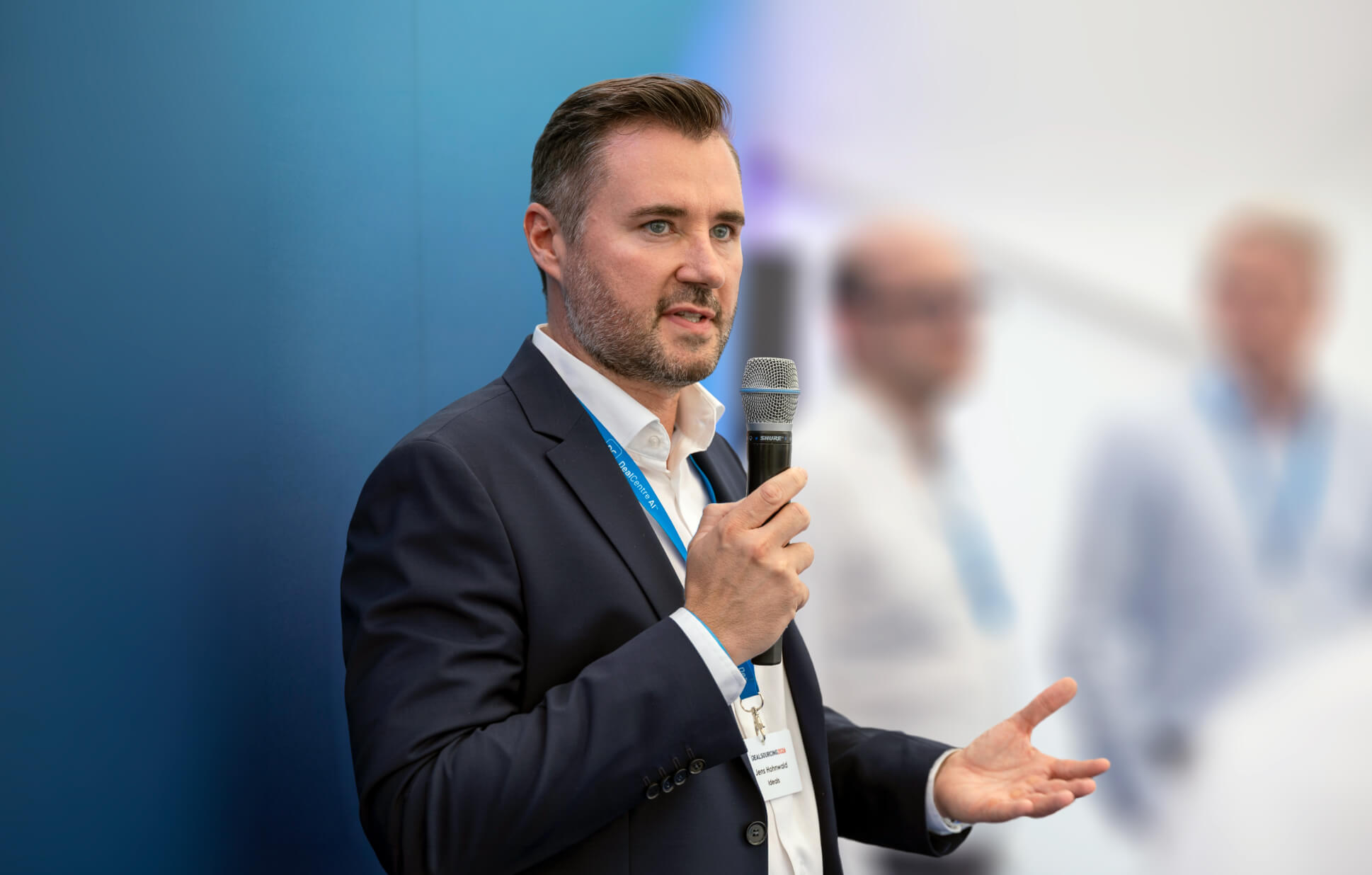
AI promises to make dealmakers faster and more effective. Yet its adoption among M&A professionals has coincided with a loss of momentum in the deal market.
This contrast was highlighted in talks and conversations at Dealsourcing 2026 last month, which brought together more than 1,200 people from private equity, M&A advisory, financing and restructuring in Oberursel, just outside Frankfurt.
It was our second year at Dealsourcing, and it was great to pick up conversations that started last year. As in 2025, we also hosted a workshop, this time on how dealmakers really use AI in practice.
Three themes shaped the day: a record private equity exit backlog, a recovery that keeps stalling, and AI moving from talking point to everyday tool. Here are my takeaways.
A private equity traffic jam
The opening keynote set the tone. Kai Hesselmann, Founder and Managing Partner at DEALCIRCLE, described the state of private equity as the biggest traffic jam in its history, and the audience seemed to agree.
The numbers back him up. According to Bain & Company’s Global Private Equity Report 2026, buyout funds are sitting on around 32,000 unsold companies worth $3.8 trillion. Holding periods at exit have stretched to around seven years, up from five to six years between 2010 and 2021. Almost 40% of portfolio companies are now held for more than five years.
For investors, that means less cash coming back. Distributions as a share of net asset value have stayed below 15% for four years running, an industry record.
Looking at Germany specifically, EY-Parthenon counted 19% fewer private equity transactions in Q1 2026 than a year earlier, the lowest level since Q2 2021. Exits from German PE portfolios fell from 23 to 19.
Every company stuck in a portfolio is capital that can’t be recycled into new deals. As Marc Potel, Head of Industrial M&A at Investec, told us for our M&A Mid-Year Review: “Private equity exits need to be revisited if we are going to unclog the system, but that will happen over time.”
A recovery that keeps stalling
The second theme is one we’ve lived through more than once. Every time the market starts to recover, a new shock stops it. Bain calls it the “Groundhog Day” dynamic: recovery deferred, again.
2026 started strong, with European M&A reaching an eight-year high in the first quarter according to LSEG. Then came the war in the Middle East and an oil price spike, alongside a sell-off in software stocks, stress in private credit and renewed worries about interest rates. This caused a swift loss of momentum, with the Argos Index showing eurozone mid-market deal volume fell 8% quarter-on-quarter in Q2.
The headlines can hide this. LSEG reports record global deal value of $2.85 trillion in H1 2026, yet the number of deals fell 9% to 24,500. Almost all of the growth came from a small number of megadeals, a trend LSEG describes as “hollowing out the small and mid-markets.” Germany shows the same pattern: the value of deals with German targets almost quadrupled to $111.6bn, while the number of deals fell 7%.
The deal maths has also become less forgiving. “12 is the new 5,” as Kai’s keynote put it. Bain estimates that with today’s prices and lower leverage, a buyout needs 10%-12% annual EBITDA growth to deliver a 2.5x return over five years, compared with around 5% a decade ago. No wonder so many conversations were about value creation plans rather than exit multiples.
And yet the mood in the halls was cautiously constructive. Processes put on hold in 2025 are being restarted. Small caps are attracting more attention, driven by succession: the IfM Bonn estimates around 186,000 German companies will need a successor between 2026 and 2030.
Our own data points the same way. New data rooms opened on the Ideals platform rose 23% year-on-year in H1 2026, and deals closed 4% faster, in 253 days on average. The market isn’t broken, instead it’s waiting and preparing.
The AI question has moved from if to how
If private equity and volatility framed the day, AI dominated the conversations. Several workshops focused on concrete use cases, including ours, “From Hype to Impact: How Dealmakers Really Use AI Tools”, with Tom Wittern, Daniel Szabo and Florian Hausen.
What struck me most is how far apart the market is. One group is still waiting for AI to arrive through corporate IT, with approved tools and policies. The other is on a very steep learning curve, using AI assistants every day to structure data rooms, manage Q&A and run first-pass due diligence.
One topic was new. Last year, when we asked our panel if they had encountered NDAs prohibiting the use of AI to review a data room, hardly anyone had. This year, however, the issue arose repeatedly, as sellers are concerned about losing control of sensitive information.
I understand the concern, but it reveals a misunderstanding of how data rooms fit into the wider AI ecosystem. Through our secure MCP integration, assistants like Claude, ChatGPT and Copilot can work directly on deal documents inside the data room. The AI sees only what the user is allowed to see, and every action is logged in an audit trail.
That is the thinking behind our approach at Ideals. We build native AI tools, such as AI redaction, translation and search, where they speed up existing workflows. Where dealmakers already rely on other tools, we integrate them.
This makes due diligence faster, more thorough and more professional on both sides of the table. In our AI in M&A 2026 research, increased efficiency and speed was the most cited benefit of AI, named by 59% of dealmakers.
More forward-thinking organisations recognise that AI is already part of dealmaking. What matters now is how it is used, and for me three principles count:
- Security: confidential deal data must stay protected and must never be used to train models.
- Accountability: people remain responsible for the results. AI supports judgment; it doesn’t replace it.
- Healthy skepticism: AI output needs to be checked, not blindly trusted.
Dealmakers who are fearful of change or outright ban AI for due diligence will soon be left behind by the competition.
Get ready for the window to open
Dealsourcing 2026 showed a market caught between frustration and preparation. The exit backlog won’t clear overnight, and the next shock may already be on its way.
But dealmakers are no longer waiting for perfect conditions. They are sharpening their processes and learning to use AI responsibly.
When the window does open, those who have done that work will be able to assess more opportunities, faster and more thoroughly than before. For me, that is the real takeaway.