


M&A Excellence Days 2026: How AI is impacting European dealmakers
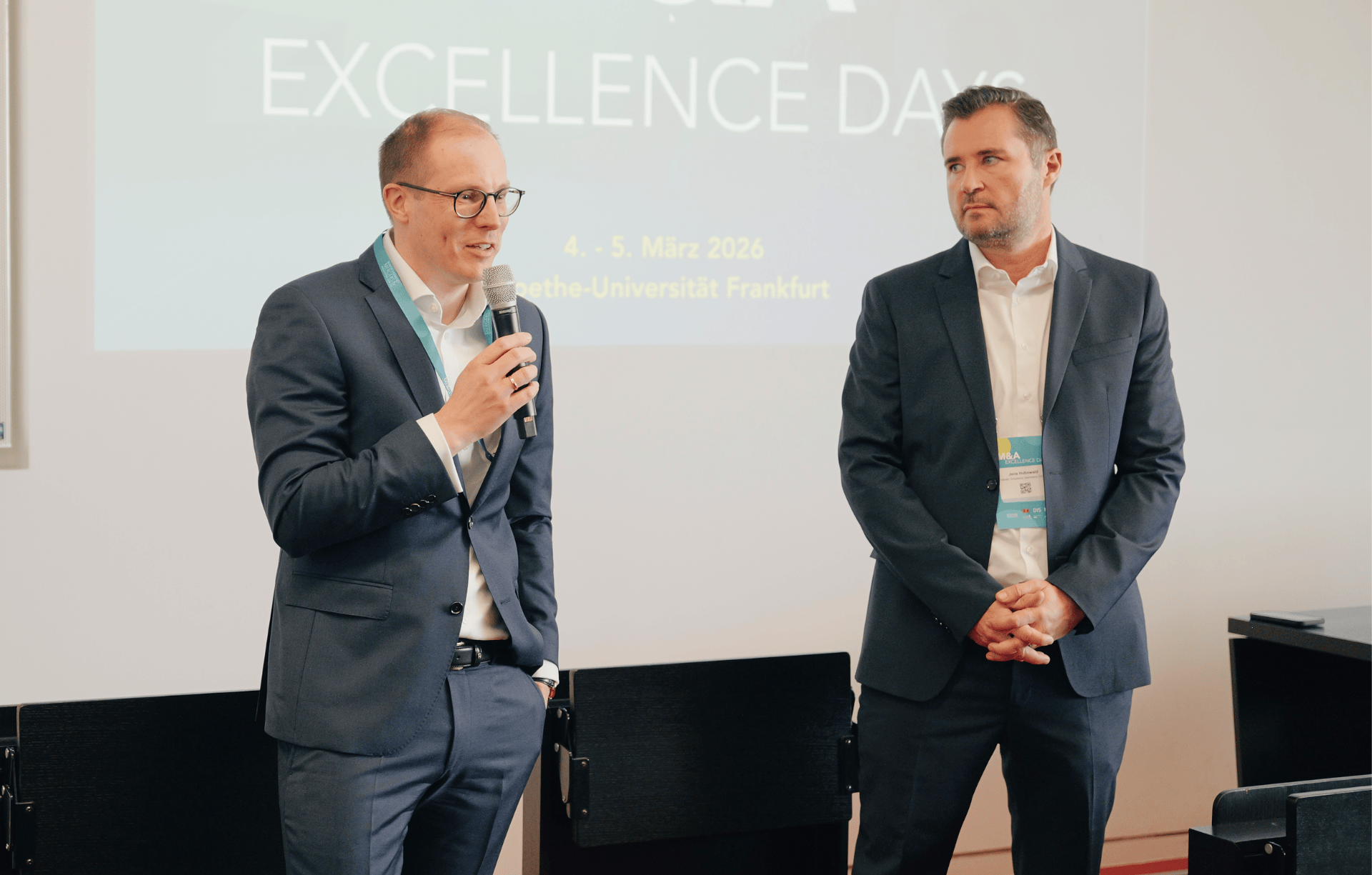
What does the next phase of M&A look like in Germany and across the DACH region?
This question framed many of the conversations during two intense days at the M&A Excellence Days in Frankfurt, where more than 700 professionals gathered to discuss everything from financing dynamics to the growing role of AI in deal execution.
Despite geopolitical uncertainty and lingering caution in the market, the overall tone was pragmatic and optimistic.
Here are key insights that emerged from the discussions.
A resilient dealmaking community navigating uncertainty
One theme kept resurfacing across panels and peer discussions at the event: resilience. In a world shaped by geopolitical uncertainty, regulatory complexity and rapid technological change, successful transactions increasingly depend on strategic clarity and disciplined execution.
Dr. Hartmut Ruh’s opening keynote speech captured this shift well. Emphasis was placed on how the most successful deals today are those based on robust strategic reasoning, meticulous processes, and practical expectations regarding post-merger integration.
While dealmakers remain cautious, particularly given events in the Middle East, there was a sense in Frankfurt that the DACH M&A market is stabilizing and gradually regaining momentum. It follows a mixed 2025 in which deal volumes rose by around 15% year-on-year in the first half, but remained below previous highs, while average deal sizes increased, reflecting a shift toward larger strategic transactions.
Several structural factors support this recovery. Financing conditions are improving, valuation expectations between buyers and sellers are beginning to converge, and a backlog of postponed exits from the past two years is gradually returning to the market.
Deal activity is also becoming more concentrated in resilient industries. Industrial technology, healthcare, and B2B software were repeatedly highlighted during the conference as attracting the strongest investor interest, while consumer-facing sectors remain under pressure.
From deal success factors to the practical impact of AI
One session I found particularly insightful was “Deals from Heaven — and the Lessons Behind Them” from Dr. Florian Bauer and Alexander Griesmeier. The analysis of award-winning transactions highlighted recurring success factors: a clearly defined strategic rationale, strong leadership alignment and the ability to execute decisively when market conditions shift.
Another major theme throughout the conference was the shift from AI hype to real operational impact. While AI has been a topic of discussion for dealmakers for several years, the focus is now moving toward practical deployment. Many organizations are experimenting with AI tools, but only a few have fully integrated them into their core deal workflows.
Where adoption is happening, three areas are already seeing measurable benefits:
- Accelerating document review and due diligence.
- Improving market scanning and target identification.
- Supporting post-merger integration planning.
Of these, integration remains the hardest part — several sessions reinforced that the value of any transaction is ultimately realized or lost in integration, and that it deserves as much rigor as the deal process itself.
Accelerating deal execution through smarter workflows
During DealCircle’s panel session on “Accelerating deal execution with AI”, I had the opportunity to dig deeper into how AI is transforming the origination and execution of deals.
Along with Kai Hesselmann from DealCircle and Frederik Krüger from Deloitte, we debated whether AI is speeding up existing processes or fundamentally changing how dealmaking is done.
We noted that AI is already creating efficiencies across the dealmaking process, particularly during due diligence, by enabling deeper analysis, earlier risk identification, and better decision-making. However, many dealmakers are still in the early stages of testing where they can get the most value from the technology.
One takeaway was that AI works best when it enhances existing workflows rather than replacing them. At Ideals, our approach has been to integrate AI directly into the data room environment where deal teams already work, enabling automation while maintaining the security and transparency required for transactions.
We already see strong adoption of features such as automated redaction, document translation, intelligent search and AI-generated document summaries.
Industry data from Ideals’ latest whitepaper “AI in M&A 2026: Expert perspectives on how dealmaking is evolving” shows that around two-thirds of dealmakers now use some form of automation in their workflow, although roughly a third are still not using these tools. For that group, the risk of falling behind is growing.
AI’s supporting role in M&A
The key trend I consistently take from conversations with customers and from industry events such as M&A Excellence Days is that AI should be seen as a co-pilot, not the pilot. It can significantly increase speed and efficiency, but interpreting insights and making decisions remains firmly the responsibility of the deal team.
Equally important is trust; in my view, AI delivers real value when it operates in controlled environments that ensure security, transparency and auditability. As adoption accelerates, the firms that successfully combine these capabilities with strong human judgment will have a clear competitive edge.