The future of M&A: Five key insights from JPMorgan and Eilla AI
Artificial intelligence has moved from promise to practical impact in M&A, helping firms of all sizes accelerate deal sourcing, evaluation, and execution.
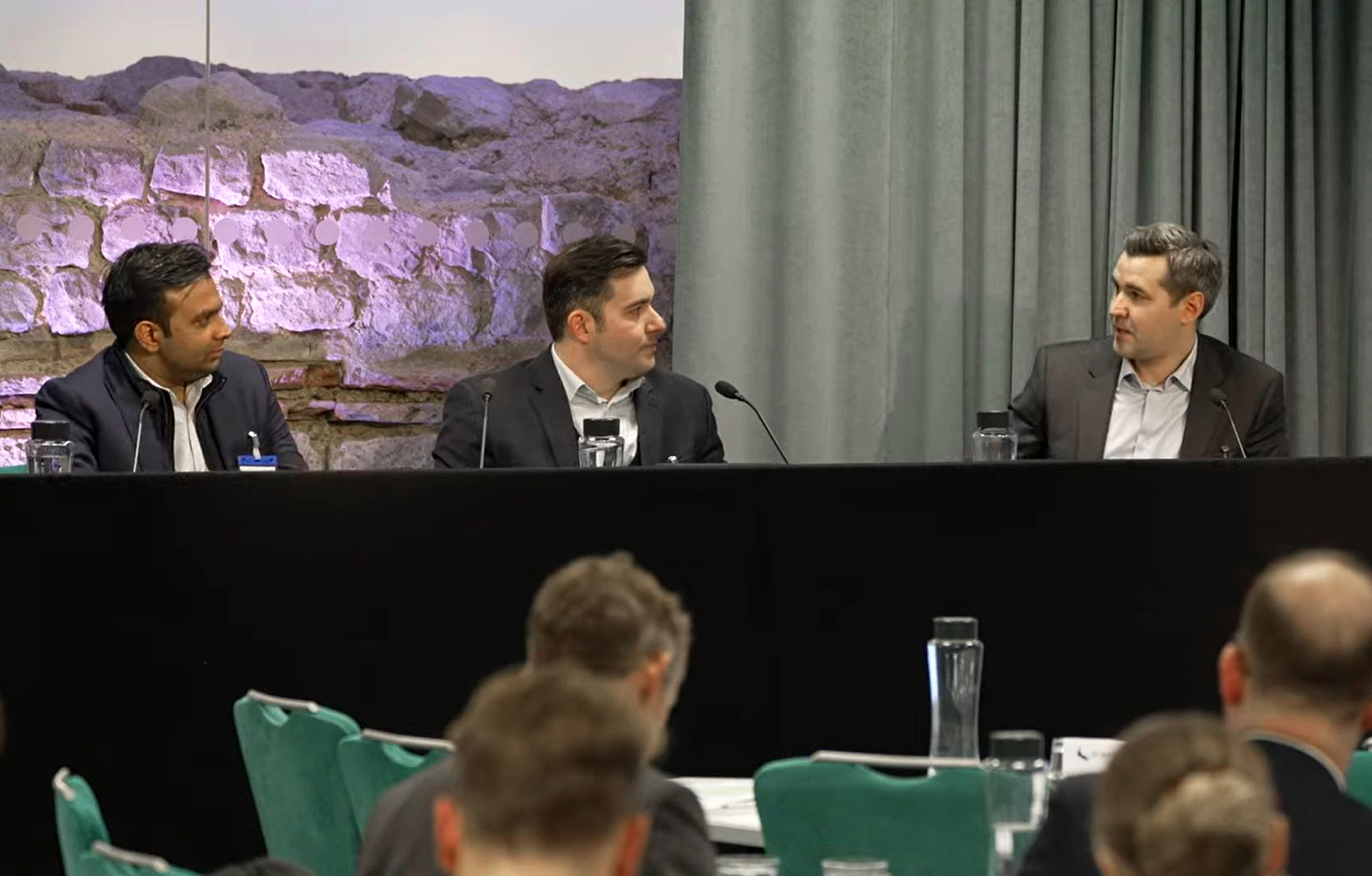
At the M&A Summit 2025, I led a panel on this topic alongside two leading dealmakers. Koundinya Challa, Vice President at JPMorgan, shared how bulge bracket banks are deploying AI, while Dmitry Zaporozhskiy, Partner at Eilla AI, explained how his firm’s platform is helping small and medium businesses maximize deal value.
Here are five key insights from our discussion.
1. Banks are adopting AI at scale
JPMorgan has long been at the forefront of technology adoption, and AI is no exception. The bank has built a proprietary large language model (LLM) and launched an AI Accelerator team that deploys solutions across markets, with the goal of measurable commercial impact.
“JPMorgan has its own LLM and we’re investing a lot in this technology. What’s been fascinating is how fast adoption has been,” said Challa.
He explained how AI accelerates early-stage analysis: “When I analyze a company’s financials, I feed the earnings transcript and the analyst Q&A from the call into our LLM. What once took 45 minutes now takes five and gives me an insight-ready summary for clients.”
Zaporozhskiy noted that this shift is no longer experimental: “Two years ago, most AI tools were in demo mode. Now they are embedded into daily workflows, and large banks have the infrastructure and engineers to make them work.”
This reflects broader trends across the sector. Citi, for example, has rolled out an “AI compendium,” used by thousands of employees to automate tasks and build presentations once handled manually by junior bankers.
2. Early career development is evolving
AI is changing the role of junior bankers and how they learn the fundamentals of the job.
Zaporozhskiy noted that analysts have traditionally learned “through pain,” spending long hours and late nights modeling and preparing marketing materials. “With AI, that sacrifice will no longer be necessary. Analysts will need training to verify outputs, and their role will evolve from generating first-stage analysis to reviewing and interpreting data.”
While Challa promoted the use of AI, he cautioned against overreliance among early-career bankers. “When you’re in a client meeting and sense hesitation, you need the full context to respond well. If AI did most of the research and you haven’t done the hard work of building the plan yourself, you’ll find it hard to engage effectively.”
In Challa’s view, this formative work has real value: it develops judgment, sharpens analytical skills, and builds client confidence, making it crucial even as workflows evolve.
3. Access to deals is becoming more democratized
For small and medium businesses, AI is leveling the playing field in M&A. Firms without deep networks or established buyer relationships are gaining access to new opportunities.
“AI helps identify potential buyers and prepares deal materials efficiently. For SMBs, this can be transformative, letting them compete on a more even footing,” said Zaporozhskiy.
Efficiency gains may also shift the economics of deal selection. Challa explained: “We may see the threshold for high-value clients drop because analysts can handle higher volumes of work. A lower-value asset that was once ignored as ‘pocket change’ may now be feasible to pursue, as it won’t put the same strain on company resources.”
4. AI use cases are broadening
AI is no longer just a research tool; it now supports the full spectrum of M&A workflows.
Challa explained that AI excels at digesting large volumes of unstructured information. “I put engagement letters, NDAs, and financial models through our LLM and ask ‘What has changed?’ Updated clauses or revised terms are captured immediately.” This saves time and reduces the risk of missing critical details that could affect deal terms.
Zaporozhskiy added that AI tools now support the entire transaction lifecycle, from origination to diligence to post-merger integration. “Preparing marketing materials is common, but the most labor-intensive task for junior bankers comes later in the deal, when they manage data room Q&A. AI tools can accelerate this process.”
Market research supports this. Bain & Company has found that AI adopters dramatically reduce the time needed to summarize diligence findings or draft integration workplans, speeding up processes that previously slowed deals.
Zaporozhskiy also predicts further evolution: “In the future, AI will help unbundle M&A mandates, meaning some processes could be outsourced to external AI providers.”
5. Human judgment remains critical
While AI is advancing rapidly and its application in M&A is growing, both speakers emphasized the importance of human judgment.
“Clients want an understanding of how the financial model works and why specific assumptions were chosen,” said Challa. “The reasoning behind the numbers is something we provide, not just outputs.”
Zaporozhskiy added, “On big deals, clients hire banks due to trust, reputation, and access to the right global buyers. These aspects cannot be replaced by AI.”
They also touched on the perennial concern of data quality. Challa noted, “Data sanctity is critical in dealmaking. Getting it 95 percent right is not enough, and 5 percent risk can open you up to liability. If you rely solely on AI, this is a risk you could be exposed to.”
From experimentation to execution
It’s clear that AI’s role in M&A has moved past hype. Our panel discussion did not focus on whether AI will impact dealmaking, but rather on how quickly firms can adopt it, where it will drive the greatest returns, and ways to ensure junior talent continues developing critical skills.
As dealmakers integrate these tools across the M&A workflow, the focus will be on execution. Firms that successfully combine AI-driven efficiency with experienced insight will gain the greatest advantage, especially as deal volumes rise and competition grows in today’s market.